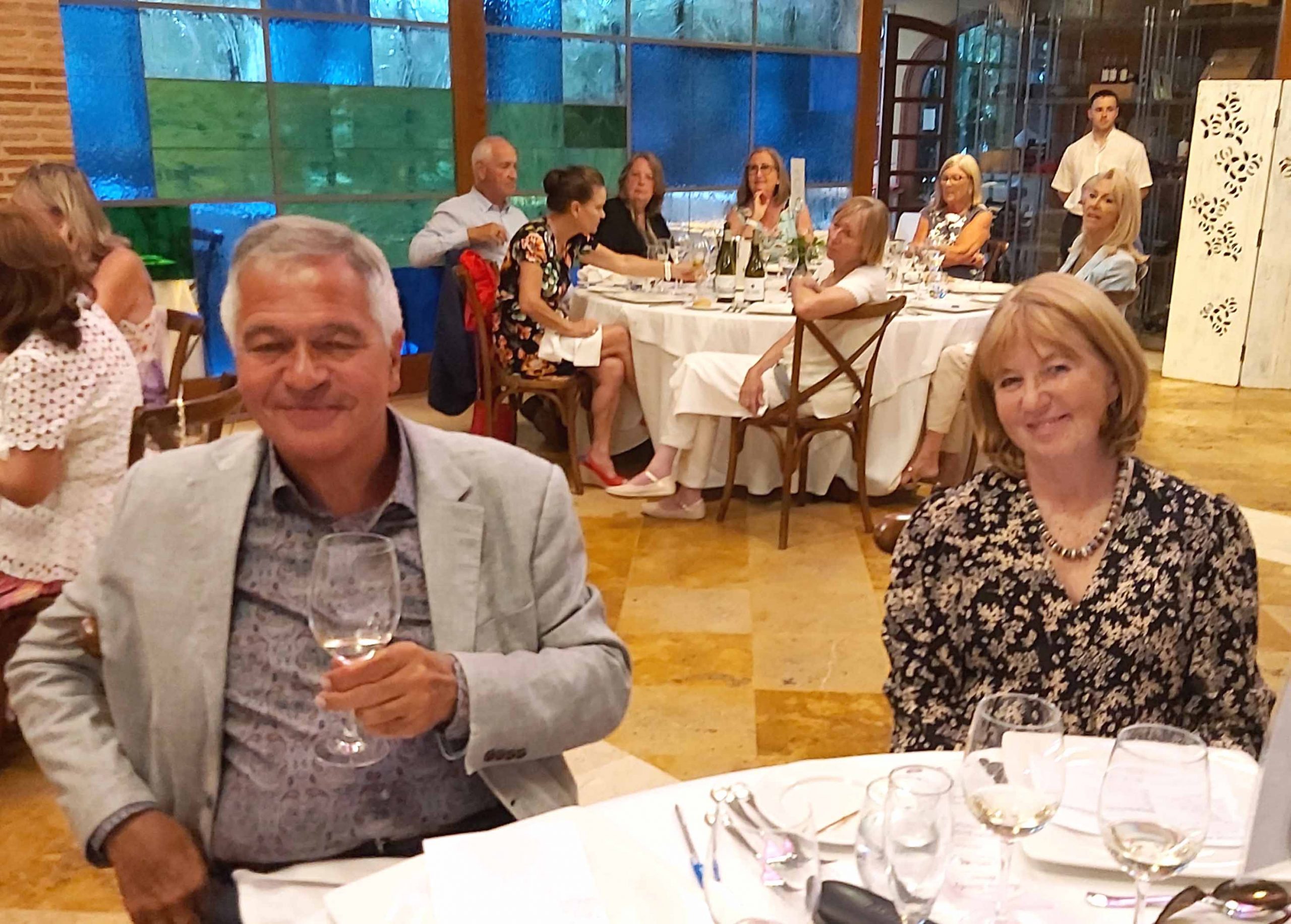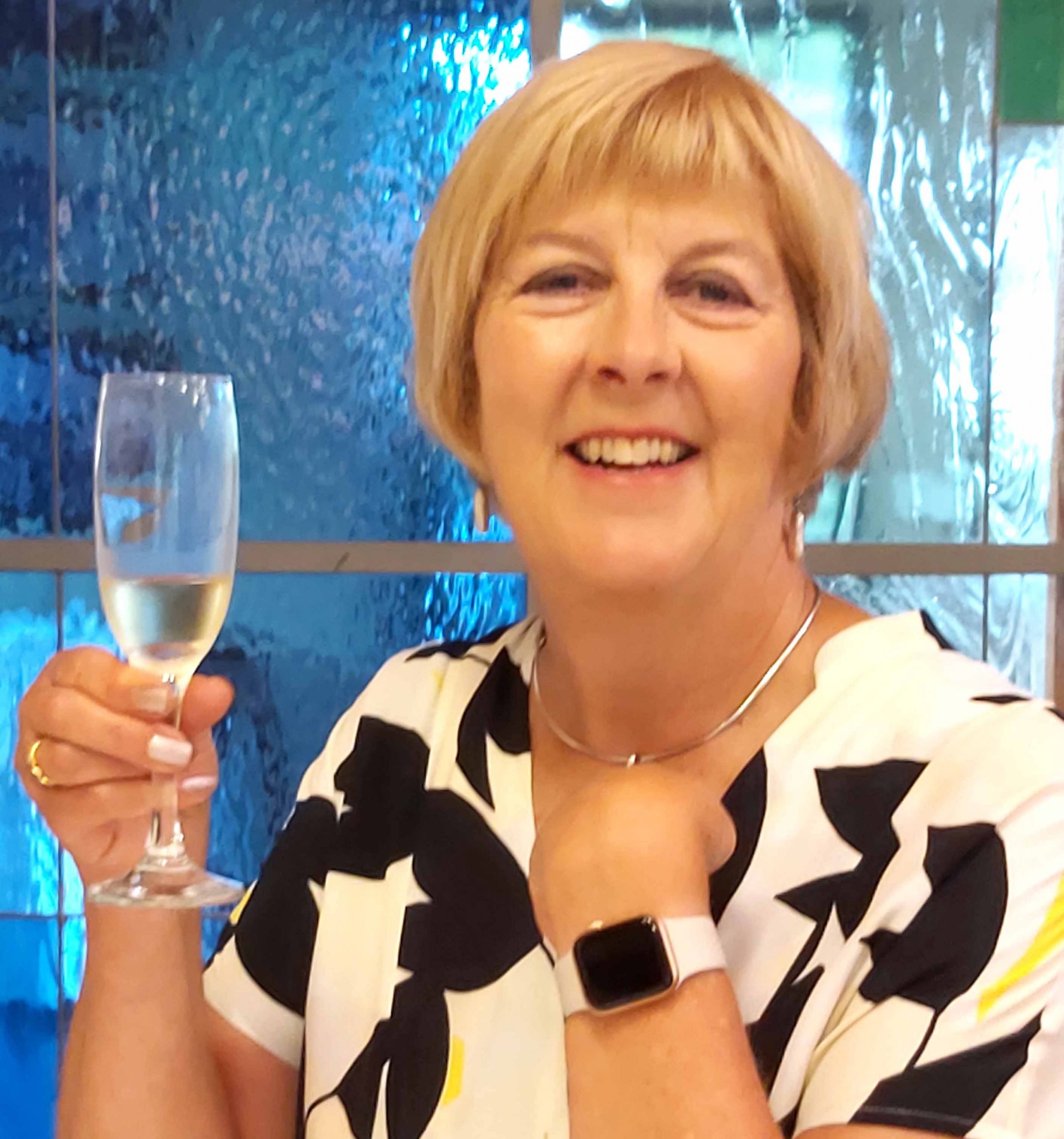
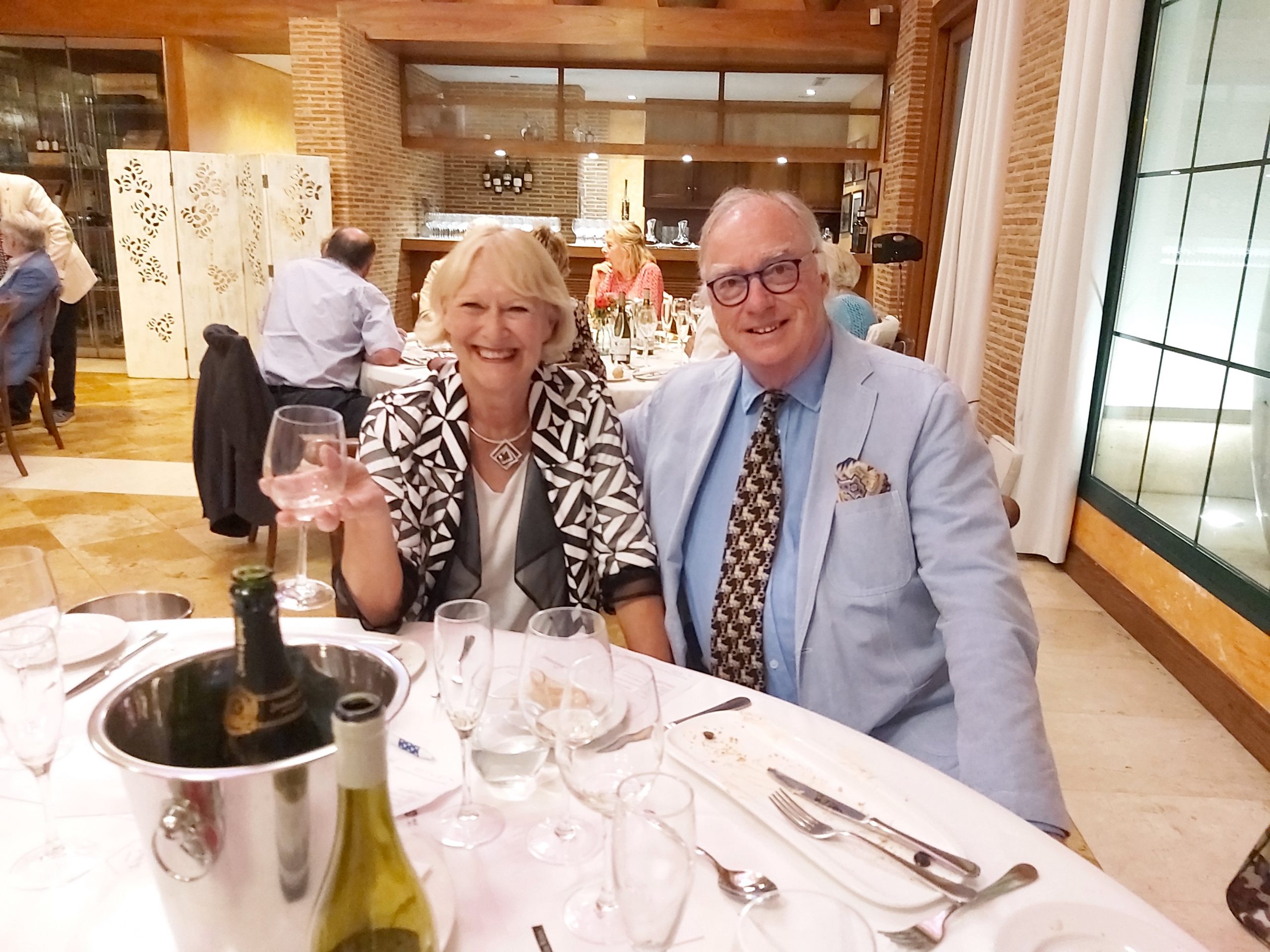
Neil and Vicki Robertson
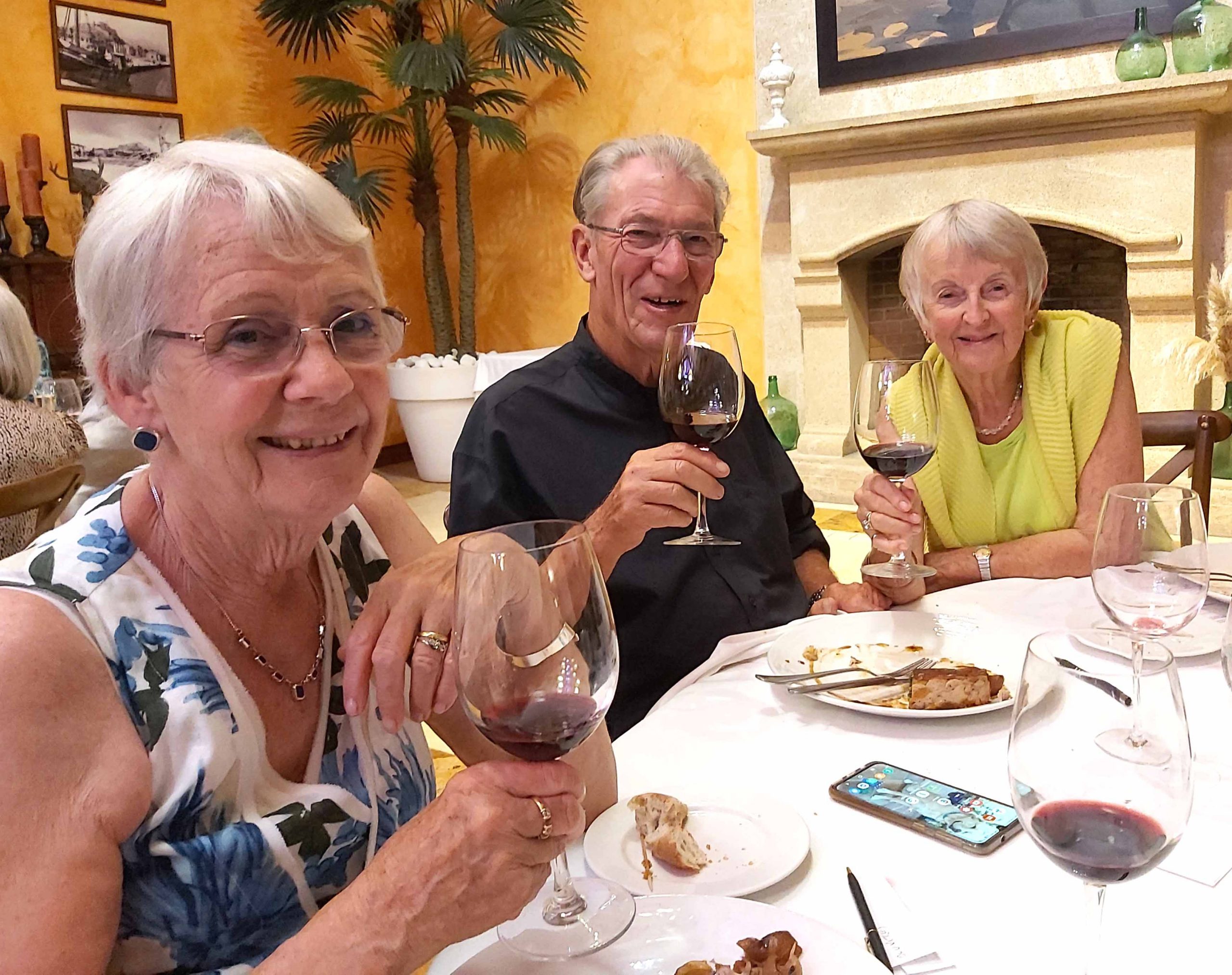
48 members and guests attended with Neil Robertson introducing his guest speaker, Brian Howard, a seasoned wine professional from London to present to us. Brian is a founding member of Wine Intelligence. This company, founded in 2002 conducts projects on behalf of wine businesses in more than 35 wine markets.
The evening was extremely interesting with Brian providing us with insights into the changing trends in the wine business as well as a selection of Spanish wines for the tasting.

Brian Howard
The organisation by Neil, Vicki and Brian together with an excellent food offering from the hotel and the preparation to make it a success was very much appreciated.
Juvé y Camps, Singular Xarel-Lo, Gran Reserva Brut Nature NV
The Cava community are in the midst of re-inventing themselves.
Generally speaking, Cava has been producing and trading in recent years as it has for the last 100 years using, of course, the traditional/Champagne method of fermentation. But the global market on which Cava depends so heavily is changing profoundly – the rise and rise of Prosecco; prolific supplies of well-priced New World sparklers; a renaissance of German sparkling wines; and, in the premium sparkling world, English Sparkling wine is now a serious contender.
So, we will see a very different Cava proposition emerging over the next 5 years, still offering good-value sparkling wine, but increasingly challenging in the premium sparkling markets – around €15 and up to €50+. Cava is going to be a very interesting category over the next few years, and thus deserves our attention now as it subjects itself to a tortuous process of reinvention. Thus, what better to assess the Cava category than with the best offering from one of the best producers.
Juvey & Camps is a family-run, 4th generation Cava producer, having celebrated its first 100 years in its current form last year. “Singular” is made from fruit picked in 2016. Unlike most Cava, this is 100% Xarel-lo grapes, with characteristics of white fruit, grapefruit and lemon, a touch of aniseed or fennel, concentrated but light, finesse, tightly strung, lowish acidity. Cava grape types. Most Cavas also This the most noble of the three permitted feature Macabeu and/or Parellada.
“Singular” involves a long development process. After 5 years of fermenting, turning, riddling and fining, this finished wine is still an iridescent pale yellow, bursting with endless tiny bubbles. The Xarel-lo characteristics of white fruit and fennel are still lifted, along with hints of brioche from prolonged ageing. The taste? Distinctive Xarel-lo, very creamy, upliftingly ripe fruit, enduring bubbles, wonderful texture. Long enduring finish. Yes, this really is Cava, and a positive indicator of the future direction of this much-loved category.
Of all our wines this evening, this the cheapest and also the one of the most versatile – wonderful for quaffing; enjoy with a wide range of fish and white meat dishes. An enduring reminder that good enjoyable wines do not have to be expensive wines.
 Rioja Blanco, Viñas Viejas, Bodegas Luis Cañas
We all know Rioja, yet few truly understand this vast and dynamic region, a community of 15,000 vineyards owners producing more wine every year than the whole of New Zealand. To fully appreciate Rioja, you need to be doggedly curious. Serendipity led me to the wines of Luis Cañas, curiosity prompted me to explore his white wines.
Quick back story. In 1970, Luis Cañas changed two hundred years of Rioja tradition – the first winemaker in the Rioja Alavesa sub-region to bottle his young wines rather than sell in bulk. In the closed and tradition-bound world of Rioja at that time, this was a bold move and, for this breakthrough and his other innovations, Luis gained and retains a much-deserved reputation as the most progressive winemaker in Alavesa. Sheltered below the Sierra Cantabria, his vineyards are mainly small old plots on chalky-clay soils, with some vines nearing 100 years age. Fabulous setting, meticulous winemaker. Do also try his
Reserva Seleccion de la Familia red Rioja, which Luis personally oversaw and is only made in good vintages.
We’re tasting another of the Cañas family’s stellar wines, the Blanco Viñas Viejas. Primarily the Viura grape, the most prolific white grape in Rioja, and ~10% Rojal, a Riojan variant of Malvasia, noted for quite strong aromatic flavours and matchingly high alcohol levels. Handpicked from 60-year-old+ vines; table selected to ensure only the best fruit is used; fermented in barrel – French and American – with all-important integrated temperature control. Then aged on its lees for 6 months or more to extract maximum flavours from this wonderful fruit; periodic bâtonnages to achieve a structured, elegant, rich wine.
Tasting note is: beautiful balance, vibrant Viura blended elegantly with the more weighty Malvasia. Barrel fermentation endows the wine with a honeyed roundness to the crisp lemony fruit. A weighty mouthful of fruit, which totally colonises your mouth, resonating with citrussy fruit and hints of flowers, other fruits and hazelnuts. Dry, enough acidity to express a fresh and lively character, with a structured and tasty finish of ripe fruit.
Luis died in 2019, but his vision for and dedication to the Alavesa sub-region is happily sustained by his talented son, Juan Luis. And one further Luis legacy – a delightful accommodation building next to the winery for all his grape pickers. Luis and his family care about employee welfare.
Finca Espolla, Perelada, northern Catalunya, 2018
Firstly, some clarification, because the name “Perelada” can confuse. The wine region in northern Catalunya is known as DO Empordà, stretching southward from the Pyrenean foothills towards the more fertile areas around Figueres, north of Girona. One of the last wine regions of Spain to emerge from rustic local winemaking to become a recognised for great wines, often with skilled blending of indigenous and international grapes. The epicentre of the wine region is a small town with a big castle, Perelada. And one of the more advanced winemaking companies based around this town and offering widespread distribution of good and great wines is also called …Peralada! Oh … and remember one of the permitted grapes used in Cava: Parellada. Are we all clear?
Javier Suqué is head honcho of Peralada – the company – and his team make many different wines, some of which are branded “Castillo Perelada”, of which really are delicious and mostly quite modestly priced. We’re tasting one a wine from one of Javier’s best vineyards, Finca Espolla, a 20-hectare estate at the base of the mighty Sierra de la Albera, about 30 kms north of Perelada – the town!
The blending ratio of this wine varies from vintage to vintage, usually about 65% Syrah and 35% Monastrell (= Mourvèdre, Mataro), blended for long temperature-controlled maceration, and aged for 24 months in Allier barrels and then further matured in bottle. Aromas: sweet red fruits, spices, caramel, coffee … just a sniff of balsamic and mineral undertones. The palate: intense, elegant, balanced, round and expressive. Characterful lingering finish, with gentle tannins. In summary: charm, elegance, a well-refined blend, a “relaxed” wine. A singular pleasure from first sniff to last gulp.
L’u Negre, Vinyes Mortitx, 2017
One of Mallorca’s best-kept secrets, away from the Island’s wine hubs of Binnisalem and Santa Maria. Tucked away in an almost secret bowl in the Tramuntana mountains, a UNESCO World Heritage site, on the famous mountain route from Pollença to Soller, about 10kms south-west of Pollença. Again, a quick back story: this wonderful hidden site, nestling between two of the Tramuntana mountain peaks, 400 metres above the sea below, was originally discovered and developed as a fruit orchard buy two horticulturalists. They believed that this unique bowl within the mountains had a wonderful microclimate for growing fruit, retaining both warmth and moisture but protected from the hottest summer temperatures by its proximity to the sea and its benevolent breezes, and irrigated by a natural torrent from the mountains peaks. They planted fruit orchards, and they were spot on about the unique conditions. Their cherries, plums and avocados flourished! When they retired and the site declined, a group of local wine-lovers bought the Quinta and just over 20 hectares, and now produce about 100,000 bottles of wine per year. To this day, Mortixt remains owned by this community of wine lovers, now 53 partners, including several local restaurateurs. So, not a co-operative of grape growers but a co-operative of owners employing a professional winemaker and team to run the estate. As far as I know, a unique winery ownership model.
This tasting features the flagship wine from this wonderful group of people, blended from their best Syrah, Merlot, Cabernet Sauvignon. Manually harvested, and each grape-type fermented in separate tanks for 2 to 3 weeks. This enables each varietal to be picked in its optimum condition, always a challenge with blends. Blending then follows, with exact proportions varying from vintage to vintage, and then aged for 12 to 16 months in Allier oak barrels, new or 1-year-old.
Tasting:
Aroma highlights of crushed violets, roasted coffee and blueberry jam. Tastes of intense rich fruit, filling your mouth with a dense texture of ripe berry fruits and well-resolved subtle spices. The whole experience is expressive, engaging, tantalisingly long, evolving into a silky, fruity finish and again featuring violets. Supported by a subtle presence of well-resolved tannins.
L’u Negre from Mortitx can rightfully claim to be a unique wine, yet with the elegant structure and poise of a Classed Growth Bordeaux, the blending alchemy of the best of Bolgheri in southern Tuscany (Sassicaia), and the intensity of a top Pesquera from Ribera del Duero.
Always decant, at least 3 hours!